
• Michael Levy
  • Barton Weitz
  • Dhruv Grewal
  • Digital
  • Videos
  • Newsletters
  • Syllabi

Retailing Management

~ 11th Edition

Retailing Management

Category Archives: Chapter 14: Retail Pricing

Can Luckin Replace Starbucks’ Third Places?

29 Wednesday Jul 2026

Posted by Retailing Management in Chapter 07: Financial Strategy, Chapter 14: Retail Pricing

≈ Leave a comment

istockphoto / Robert Way

Since the initial introduction of Starbucks and its novel-at-the-time approach to selling coffee to consumers, more than three decades ago, the United States has developed a specific coffee culture. By design, Starbucks stores represent third places, separate from work or home, where people feel comfortable enough to visit regularly and spend time. To encourage such uses, Starbucks carefully curated its stores to maximize the relaxing, communal atmosphere. Every location boasted plenty of seating, low light, and soft music, along with friendly baristas who sought real relationships with customers. In return, it charged prices that once would have been unheard of for coffee. Following its success, most competitors in this market have adopted similar strategies.

But in recent years, Starbucks has seen sales stagnate and decline. Observers offer various reasons for the shift, ranging from growing time pressures on consumers, who feel unable to sit and linger over coffee anymore, to price pressures that force consumers to cut back on little luxuries. In response, the company has been experimenting with several strategic changes, including expanding its mobile ordering options, building more comfortable seating into stores, and reducing the ratio of baristas to customers to save costs.

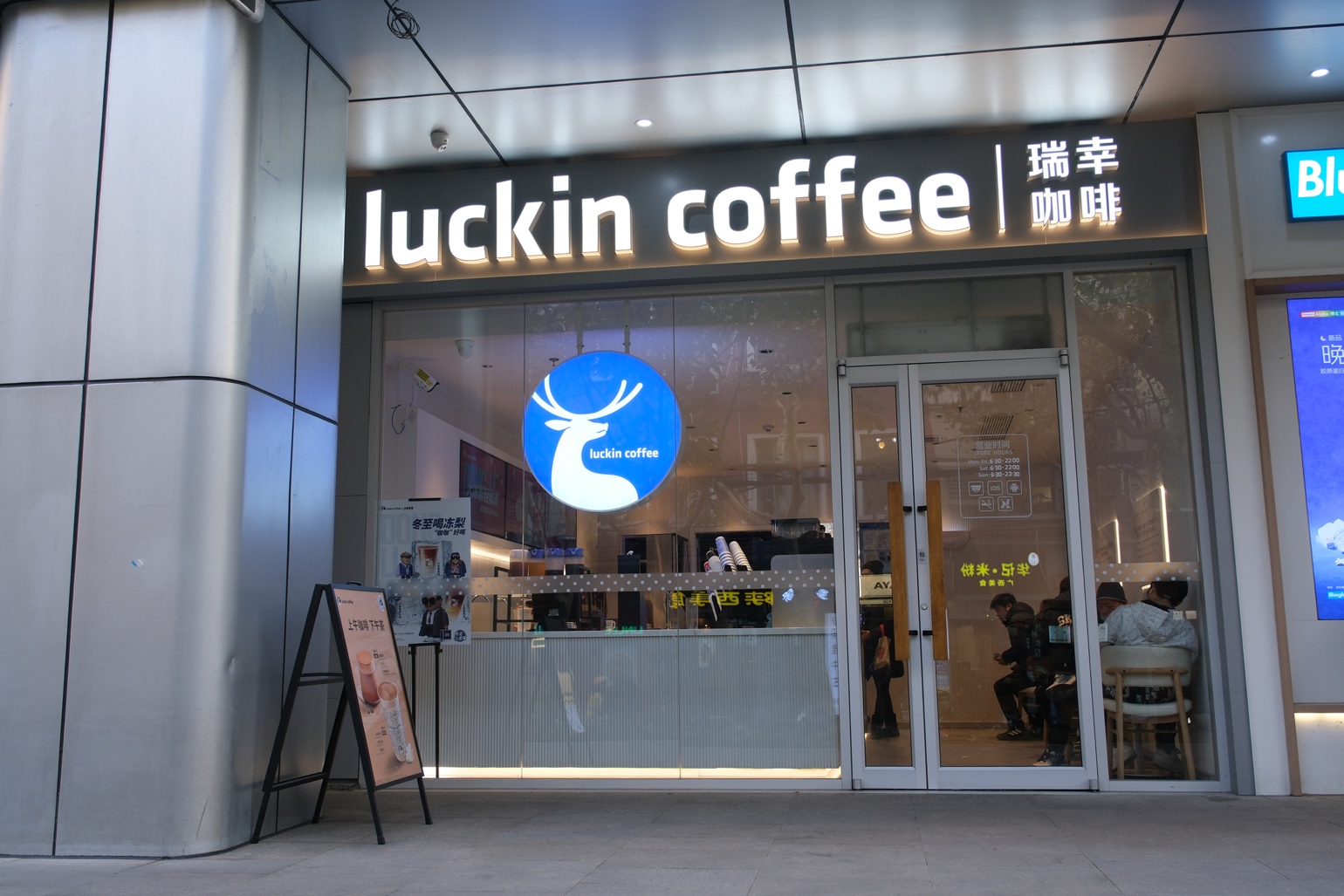
Even as Starbucks looks to regain its appeal among existing customers though, it faces a new competitive threat, in the form of Luckin Coffee, a Chinese chain that has announced its plans to expand massively in North America. Four Luckin stores already have opened in New York City, spanning different districts in Manhattan.

The Chinese coffee chain’s retail strategy prioritizes customer satisfaction, which it believes it can achieve by offering greater convenience and efficiency. As such, employees receive focused training in how to distribute drinks faster, especially those ordered for pickup, without reducing the quality of the beverage.

In addition to quick customer service, all stores boast menus that feature a wide variety of offerings, including fruit-flavored alternatives to classic coffee and tea drinks. Its related food offerings highlight the freshness of the baked goods. Finally, and in accordance with its focus on efficiency, the product prices are substantially less expensive: Most of Luckin’s offerings cost almost one-third less than equivalent items at Starbucks.

On the basis of this appealing promise, Luckin has built a larger presence in China than Starbucks has, in less than 10 years. In Luckin’s first year of operation alone, Starbucks share prices in China decreased by more than 25 percent.

Although it’s too soon to predict the brand’s ultimate appeal and longevity among U.S. consumers, experts seem optimistic about Luckin’s potential. In support of these predictions, they point to the many other Chinese food conglomerates that have expanded into North America in recent years, often with great success.

Discussion Questions

  1. Is speed and efficiency more important, or is a pleasant environment the key to appealing to the average coffee shop consumer today?
  2. What other changes might Starbucks adopt now, before Luckin begins its wider expansion in North America?

Sources: Tim Balk, “As Starbucks Slumps, a Chinese Coffee Giant Sees an Opening in New York,” The New York Times, September 4, 2025; “China’s Luckin Coffee Opens First U.S. Stores in New York City, Taking On Starbucks,” NBC Palm Springs, June 30, 2025; “Starbucks’ China Rival Luckin Coffee to Open First US Store in New York City,” TechNode, May 16, 2025

A Dupe Dilemma: Lululemon Sues Costco Over Alleged Infringement

10 Wednesday Jun 2026

Posted by Retailing Management in Chapter 14: Retail Pricing

≈ Leave a comment

istockphoto / FinkAvenue

Lululemon’s success stems from a combination of factors: awareness of consumer trends embracing look-good, feel-good wellness pursuits; a reputation for providing relatively fashion-forward workout appeal; and pricing that finds a good balance between those aspects. Because Lululemon gear provides both symbolic and functional value, the brand can justify the relatively expensive prices it charges for its leggings, jackets, and socks.

But popularity and notoriety can come with their own prices. Noting the popularity of Lululemon apparel, competitors in the crowded athletic and athleisure clothing markets have sought to mimic its success, and its style, by introducing “dupes” or duplicate versions. There’s a vast market in dupes, especially for Lululemon gear, such that #LululemonDupes remains a popular hashtag on social media. According to Lululemon though, some of those dupes cross the line into trademark infringement, as alleged in its suit against Costco.

The suit claims that certain workout pieces sold in Costco—known for its low cost offerings—resemble Lululemon’s proprietary designs too closely. Beyond broad similarities in color, material, shape, or function, as might be accepted in copycat products, it asserts that the items in contention exactly replicate the silhouettes, seams, and accents that the brand has sought to establish as markers of its own, distinctive identity and appeal.

In support of its claims, Lululemon provided evidence involving three product lines: Define jackets, Scuba jackets, and ABC pants. In side-by-side comparisons submitted to the courts, it showed how its Define jacket collection—which it promotes as overwear that can help people transition easily from a strenuous run into everyday chores—features a unique, tailored silhouette, achieved by stitching the back panels together in a novel way. Then it showed how the Jockey Ladies Yoga Jacket carried by Costco featured the same seaming along the back, producing the flattering silhouette that helped make the Define so popular. It also indicated the price difference: $168 for Lululemon’s Define design, $17 for the Costco dupe.

Another jacket, the Scuba from Lululemon, retails at $128 and features a distinctive zipper location on the front, as well as creative pocket placements. The Danskin Half-Zip Hoodie at Costco, selling for $8, displays the exact same zipper and pocket locations. The other example listed in the suit sought to set up a consistent argument, showing how the Kirkland 5-Pocket pants ($20) copy Lululemon’s ABC pant ($128), with almost imperceptible variations in coloring, pant leg style, and sizing.

According to Lululemon, because Costco is so well-known for selling private-label versions of national brands, the dupes create an unacceptable risk of increasing consumers’ confusion. That is, shoppers at Costco likely are aware that, for example, the Kirkland brand diapers on the shelves are made in the same manufacturing plant that Huggies diapers are. Thus, they might be forgiven if they believe that Kirkland-branded jackets or pants that look just like Lululemon versions actually are being produced by Lululemon.

There’s where the problem lies. To maintain its brand strength and price positioning, Lululemon needs to ensure that all its products offer high quality. If consumers get confused and believe that a dupe is made by Lululemon, and then that dupe offers poor quality, it arguably harms the brand’s hard-won position

Notably, only the dupe of the pants carries Costco’s in-house Kirkland brand. The others appear sourced from external manufacturers (i.e., Jockey and Danskin). Still, the company claims that the significant research and development it conducts to ensure that its products function at the standard that customers have come to expect deserves protection as intellectual property that others should not be allowed to copy.

Discussion Questions

  1. What is the standard or threshold that applies, when it comes to defining a similar, copycat product as a fair dupe versus an illegal infringement? Has Costco crossed that line, in your opinion?
  2. Analyze Lululemon’s pricing strategy, in light of its claims here. Why is it so determined to protect its designs from being mimicked by other firms, especially those that sell at lower prices?

Sources: Blake Brittain, “Lululemon Sues Costco for Allegedly Ripping Off Clothing Designs,” Reuters, June 27, 2025; Eric Goldman, “Analyzing the Lululemon v. Costco Dupe Suit,” Technology & Marketing Law Blog, July 9, 2025; Kelly Tyko, “Lululemon Sues Costco Wholesale for Selling Alleged Dupes,” Axios, July 1, 2025; Micah Barkley, “Lululemon Gets Aggressive About Lookalikes with Costco Lawsuit,” Bloomberg, July 2, 2025

Gallery

Penny-Pinching: Kohl’s Revises Coupon Policy

29 Monday Dec 2025

Posted by Retailing Management in Chapter 07: Financial Strategy, Chapter 14: Retail Pricing

≈ Leave a comment

Tags

Coupons, Policy, scan

This gallery contains 1 photo.

For many years, Kohl’s built its retail reputation on the excellence of its coupon programs, promising shoppers that, with a …

Continue reading →

Gallery

Fleet Feet in the Streets: Why Hoka Embraces Physical Stores

22 Monday Dec 2025

Posted by Retailing Management in Chapter 06: Retail Market Strategy, Chapter 14: Retail Pricing

≈ Leave a comment

Tags

digital, hoka, phygital, shoes, stores

This gallery contains 1 photo.

Shoes were among the earliest product markets to gain traction in ecommerce channels. Consumers could easily find the brand, model, …

Continue reading →

Gallery

Efforts by the United Kingdom to Regulate Buy Now, Pay Later Schemes

01 Monday Dec 2025

Posted by Retailing Management in Chapter 14: Retail Pricing

≈ Leave a comment

Tags

consumer, debt, Law, legal, Pay Later, protection, trap

This gallery contains 1 photo.

Buy now, pay later schemes are a modern take on traditional layaway payment options, with a few critical differences. That …

Continue reading →

Gallery

Reslicing the Pie: Private Fund Eyes Takeover of Papa John’s

17 Tuesday Jun 2025

Posted by Retailing Management in Chapter 14: Retail Pricing

≈ Leave a comment

Tags

Acquisition, Papa John's, Pizza, Take over

This gallery contains 10 photos.

When it comes to the pizza wars, skirmishes are ongoing, and the battle for dominance and control leads to constantly …

Continue reading →

Gallery

Tip of the Iceberg? Requests for Tips in Self-Service Kiosks

30 Wednesday Apr 2025

Posted by Retailing Management in Chapter 14: Retail Pricing, Chapter 16: Human Resources and Managing the Store

≈ Leave a comment

This gallery contains 1 photo.

According to a recent survey by the Pew Research Center, American consumers are suffering a new sort of modern malaise: …

Continue reading →

Gallery

Did PepsiCo Violate the Robinson-Patman Act? The FTC Alleges It Did

28 Monday Apr 2025

Posted by Retailing Management in Chapter 14: Retail Pricing

≈ Leave a comment

This gallery contains 1 photo.

The Robinson-Patman Act, passed by the U.S. Congress in 1936, prohibits anticompetitive actions by U.S. firms, especially price discrimination. Mostly, …

Continue reading →

Gallery

Coming Apart at the Seams: Christian Dior Faces Reputational Damage

07 Monday Oct 2024

Posted by Retailing Management in Chapter 13: Buying Merchandise, Chapter 14: Retail Pricing

≈ Leave a comment

Tags

bags, brand, Quality, reputation

This gallery contains 1 photo.

When Jennifer Lawrence accepted her Academy Award for Best Actress in 2013, she tripped and fell on her way up …

Continue reading →

Gallery

McFlation: Finding Pricing Strategies to Ensure Both Profit and Consumer Loyalty

05 Monday Aug 2024

Posted by Retailing Management in Chapter 05: Customer Buying Behavior, Chapter 14: Retail Pricing

≈ Leave a comment

Tags

Demand, Inflation, McDonald's, price increases, Pricing

This gallery contains 1 photo.

Fast food appeals to consumers because it offers consistency and convenience. But perhaps even more important, it makes these offers …

Continue reading →

← Older posts

Blog Stats

  • 147,248 hits

Articles by Chapter

  • Chapter 01: Introduction to the World of Retailing (19)
  • Chapter 02: Types of Retailers (84)
  • Chapter 03: Digital Retailing (25)
  • Chapter 04: Multichannel and Omnichannel Retailing (100)
  • Chapter 05: Customer Buying Behavior (90)
  • Chapter 06: Retail Market Strategy (195)
  • Chapter 07: Financial Strategy (52)
  • Chapter 08: Retail Locations (48)
  • Chapter 09: Retail Site Location (24)
  • Chapter 10: Information Systems and Supply Chain Management (111)
  • Chapter 11: Customer Relationship Management (57)
  • Chapter 12: Managing the Merchandise Planning Process (61)
  • Chapter 13: Buying Merchandise (68)
  • Chapter 14: Retail Pricing (78)
  • Chapter 15: Retail Communication Mix (64)
  • Chapter 16: Human Resources and Managing the Store (75)
  • Chapter 17: Store Layout, Design, and Visual Merchandising (61)
  • Chapter 18: Customer Service (77)
  • Retail Tidbits (130)
  • Uncategorized (6)

Tags

AI Amazon Artificial Intelligence Buying Merchandise China Customer Buying Behavior Customer Relationship Management Customer service CVS Delivery Ethics Fashion financial strategy Global Grocery Human Resource Management Ikea Information Systems Introduction to Retailing Kroger Luxury Macy's Malls Managing Merchandise Planning Managing the Store McDonald's Millennials Mobile Apps Multichannel Retailing Online retailing Pricing Retail Communication Mix Retail Locations Retail Market Strategy Retail Pricing Retail Tidbit Store Design Store Layout Supply Chain Management Target Technology Types of Retailers visual merchandising Walmart Whole Foods

RSS Feed

  • RSS - Posts

Articles by Chapter

  • Chapter 01: Introduction to the World of Retailing (19)
  • Chapter 02: Types of Retailers (84)
  • Chapter 03: Digital Retailing (25)
  • Chapter 04: Multichannel and Omnichannel Retailing (100)
  • Chapter 05: Customer Buying Behavior (90)
  • Chapter 06: Retail Market Strategy (195)
  • Chapter 07: Financial Strategy (52)
  • Chapter 08: Retail Locations (48)
  • Chapter 09: Retail Site Location (24)
  • Chapter 10: Information Systems and Supply Chain Management (111)
  • Chapter 11: Customer Relationship Management (57)
  • Chapter 12: Managing the Merchandise Planning Process (61)
  • Chapter 13: Buying Merchandise (68)
  • Chapter 14: Retail Pricing (78)
  • Chapter 15: Retail Communication Mix (64)
  • Chapter 16: Human Resources and Managing the Store (75)
  • Chapter 17: Store Layout, Design, and Visual Merchandising (61)
  • Chapter 18: Customer Service (77)
  • Retail Tidbits (130)
  • Uncategorized (6)

Tags

AI Amazon Artificial Intelligence Buying Merchandise China Customer Buying Behavior Customer Relationship Management Customer service CVS Delivery Ethics Fashion financial strategy Global Grocery Human Resource Management Ikea Information Systems Introduction to Retailing Kroger Luxury Macy's Malls Managing Merchandise Planning Managing the Store McDonald's Millennials Mobile Apps Multichannel Retailing Online retailing Pricing Retail Communication Mix Retail Locations Retail Market Strategy Retail Pricing Retail Tidbit Store Design Store Layout Supply Chain Management Target Technology Types of Retailers visual merchandising Walmart Whole Foods

Proudly powered by WordPress Theme: Chateau by Ignacio Ricci.


Loading Comments...
 

You must be logged in to post a comment.