
istockphoto / Robert Way
Since the initial introduction of Starbucks and its novel-at-the-time approach to selling coffee to consumers, more than three decades ago, the United States has developed a specific coffee culture. By design, Starbucks stores represent third places, separate from work or home, where people feel comfortable enough to visit regularly and spend time. To encourage such uses, Starbucks carefully curated its stores to maximize the relaxing, communal atmosphere. Every location boasted plenty of seating, low light, and soft music, along with friendly baristas who sought real relationships with customers. In return, it charged prices that once would have been unheard of for coffee. Following its success, most competitors in this market have adopted similar strategies.
But in recent years, Starbucks has seen sales stagnate and decline. Observers offer various reasons for the shift, ranging from growing time pressures on consumers, who feel unable to sit and linger over coffee anymore, to price pressures that force consumers to cut back on little luxuries. In response, the company has been experimenting with several strategic changes, including expanding its mobile ordering options, building more comfortable seating into stores, and reducing the ratio of baristas to customers to save costs.
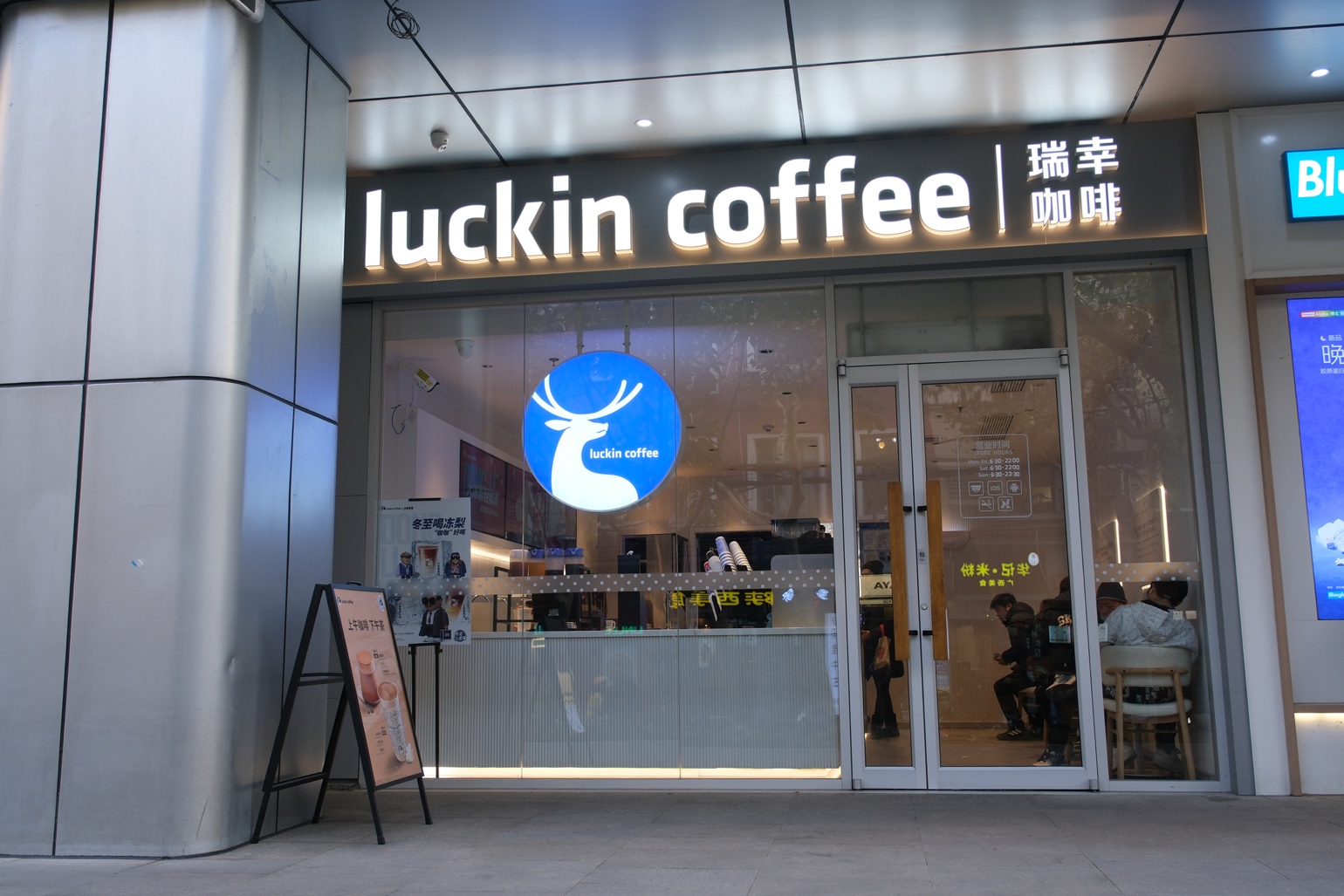
Even as Starbucks looks to regain its appeal among existing customers though, it faces a new competitive threat, in the form of Luckin Coffee, a Chinese chain that has announced its plans to expand massively in North America. Four Luckin stores already have opened in New York City, spanning different districts in Manhattan.
The Chinese coffee chain’s retail strategy prioritizes customer satisfaction, which it believes it can achieve by offering greater convenience and efficiency. As such, employees receive focused training in how to distribute drinks faster, especially those ordered for pickup, without reducing the quality of the beverage.
In addition to quick customer service, all stores boast menus that feature a wide variety of offerings, including fruit-flavored alternatives to classic coffee and tea drinks. Its related food offerings highlight the freshness of the baked goods. Finally, and in accordance with its focus on efficiency, the product prices are substantially less expensive: Most of Luckin’s offerings cost almost one-third less than equivalent items at Starbucks.
On the basis of this appealing promise, Luckin has built a larger presence in China than Starbucks has, in less than 10 years. In Luckin’s first year of operation alone, Starbucks share prices in China decreased by more than 25 percent.
Although it’s too soon to predict the brand’s ultimate appeal and longevity among U.S. consumers, experts seem optimistic about Luckin’s potential. In support of these predictions, they point to the many other Chinese food conglomerates that have expanded into North America in recent years, often with great success.
Discussion Questions
- Is speed and efficiency more important, or is a pleasant environment the key to appealing to the average coffee shop consumer today?
- What other changes might Starbucks adopt now, before Luckin begins its wider expansion in North America?
Sources: Tim Balk, “As Starbucks Slumps, a Chinese Coffee Giant Sees an Opening in New York,” The New York Times, September 4, 2025; “China’s Luckin Coffee Opens First U.S. Stores in New York City, Taking On Starbucks,” NBC Palm Springs, June 30, 2025; “Starbucks’ China Rival Luckin Coffee to Open First US Store in New York City,” TechNode, May 16, 2025
You must be logged in to post a comment.